Source Heavy Duty Anti Spatter Welding Table for Fabrication
Find 30 heavy duty anti spatter welding table options for industrial fabrication, automotive repair, and structural steel assembly. Compare cast iron and steel platforms with 16mm or 28mm holes, 50mm or 100mm spacing, and nitriding surface treatments to find the right welding support.
Key considerations
Products List




Comprehensive Sourcing Guide
Heavy Duty Anti Spatter Welding Table Sourcing Guide
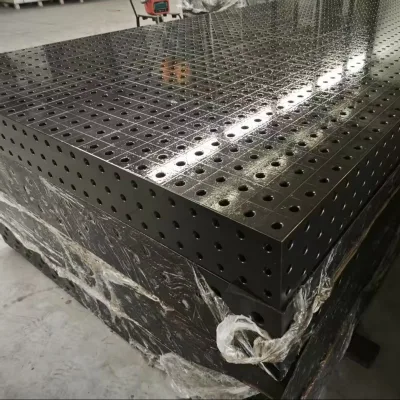
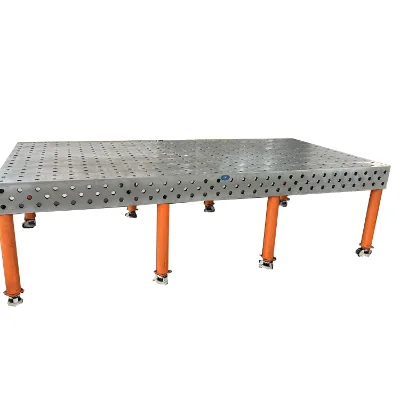
Procuring a heavy duty anti spatter welding table requires careful evaluation of material composition and structural integrity to ensure long-term durability in high-heat environments. Buyers must prioritize tables constructed from cast iron or steel, as these materials provide the necessary thermal mass and rigidity to withstand repeated welding operations without warping. The observed product listings indicate a significant weight, often around 700 kg, which serves as a critical indicator of stability and resistance to vibration during heavy fabrication tasks. This substantial mass helps maintain precise alignment of workpieces, reducing the need for constant repositioning and enhancing overall workflow efficiency in industrial settings.
Surface treatment is equally vital for maintaining the functionality of the welding table over time. Processes such as heat treatment, nitrogen treatment, and nitriding are commonly employed to enhance hardness and resistance to spatter adhesion. These treatments create a protective layer that prevents molten metal from sticking to the surface, thereby simplifying cleanup and preserving the precision of the hole patterns. Buyers should verify that the surface treatment is applied uniformly across the entire platform, including the edges and support structures, to ensure consistent performance and longevity. Ignoring these details can lead to premature wear and compromised accuracy in welding projects.
Product Scope and Observed Listing Signals
The current market for welding tables includes a variety of configurations, ranging from standard 2D platforms to more complex 3D flexible welding tables. Listings often highlight specific hole patterns, such as 50x50mm or 100x100mm grids, with hole diameters of 16mm or 28mm, which accommodate a wide range of clamping fixtures and vices. The aperture size and tolerance class, often cited as ≤0.14mm, are crucial for ensuring that accessories fit securely and maintain precise positioning. Buyers should carefully review the listed specifications to match the table’s hole pattern with their existing tooling inventory, avoiding costly mismatches that could disrupt production schedules.
Accessories and customization options play a significant role in defining the scope of these products. Many suppliers offer customizable features, including adjustable welding turning rolls and flexible combination tilters, which expand the table’s utility for complex assemblies. The availability of legs or steel frame supports allows for tailored installation based on workshop floor conditions. Additionally, the condition of the products is typically listed as new, with warranties ranging from one to two years, providing buyers with a baseline level of assurance. Understanding these variables helps in selecting a table that aligns with specific operational needs and spatial constraints.
Technical Specifications to Verify
Verifying the physical dimensions and structural design is the first step in technical due diligence. The standard size of 1200x2400mm is common, but buyers must confirm that this footprint fits their workspace and allows for adequate maneuverability around the table. The single package size and weight are critical for logistics planning, as heavy items like these require specialized handling equipment and reinforced flooring. Buyers should also check the voltage requirements, noting that some tables may list 110V/220V compatibility, although many heavy duty tables are non-electric and rely on manual clamping mechanisms. Clarifying these details prevents installation errors and ensures the table integrates smoothly into the existing workshop infrastructure.
Precision machining of the working surfaces is another key technical aspect to verify. The tolerance of the hole pattern directly impacts the repeatability of welding operations, so buyers should request documentation or certificates confirming the machining accuracy. Features such as strictly made construction and specific hole spacing, like 50mm or 100mm intervals, contribute to the table’s overall precision. Additionally, the maximum temperature rating, often cited around 480°C, indicates the table’s thermal resistance. Buyers should ensure that this rating exceeds the expected heat output of their welding processes to prevent surface degradation and maintain dimensional stability over time.
Compliance and Safety Documentation
Safety and compliance are paramount when sourcing industrial equipment, even for passive tools like welding tables. Buyers should request certification documents, such as ISO standards, to verify that the manufacturer adheres to recognized quality management systems. While specific safety certifications for the table itself may vary, the manufacturing process should comply with relevant material standards, such as DIN St52-3 for steel components. This ensures that the base material meets minimum strength and durability requirements, reducing the risk of structural failure under heavy loads. Buyers must insist on clear documentation to mitigate liability and ensure that the equipment meets workplace safety regulations.
Documentation should also cover the origin and traceability of materials. The place of origin, often listed as Hebei, China, should be verified for consistency with supply chain requirements. Buyers should ask for material test reports or mill certificates for the cast iron and steel components to confirm their chemical composition and mechanical properties. This level of transparency is essential for industries with strict regulatory oversight, such as aerospace or automotive manufacturing. By maintaining a paper trail of compliance documents, buyers can demonstrate due diligence and protect their operations from potential legal or operational risks associated with substandard equipment.
Cost Drivers and Commercial Terms
The price range for welding tables varies significantly, from affordable basic models to high-end precision units costing thousands of dollars. Key cost drivers include the material thickness, surface treatment quality, and the complexity of the hole pattern. Tables with nitriding processes and tighter tolerance classes command higher prices due to the additional manufacturing steps and quality control measures involved. Buyers should also consider the cost of accessories, such as clamps and vices, which are often sold separately. Understanding these factors helps in budgeting accurately and avoiding unexpected expenses that can inflate the total cost of ownership.
Commercial terms, including minimum order quantities (MOQ) and packaging, also influence the overall cost. Observed listings often show an MOQ of one unit, making these tables accessible for individual workshops or small-scale operations. Packaging is typically done in wooden cases or plywood boxes to protect the heavy and fragile surfaces during transit. Buyers should negotiate shipping terms carefully, as the weight and size of these tables can result in high freight costs. Additionally, warranty periods, ranging from one to two years, should be clearly defined in the contract to ensure coverage for any manufacturing defects or premature wear.
Supplier Qualification and Quality Control
Evaluating supplier qualifications is essential to ensure reliable delivery and product quality. Buyers should assess the manufacturer’s production capacity, quality control processes, and after-sales support capabilities. Suppliers with a history of producing customized welding tables are often better equipped to handle specific requirements, such as unique hole patterns or surface treatments. It is advisable to request references or case studies from previous clients to gauge the supplier’s reliability and the performance of their products in real-world applications. This due diligence helps in selecting a partner who can consistently meet quality standards and delivery timelines.
Quality control measures should be explicitly discussed during the sourcing process. Buyers should inquire about the inspection procedures used before shipment, including checks for surface defects, hole pattern accuracy, and structural integrity. Some suppliers may offer third-party inspection services or allow buyers to conduct factory audits. Establishing clear quality acceptance criteria in the purchase agreement ensures that any deviations from specifications can be addressed promptly. By prioritizing suppliers with robust quality control systems, buyers can minimize the risk of receiving defective products and ensure long-term satisfaction with their investment.
Long-Term Procurement Checks
Long-term procurement success depends on establishing a framework for ongoing performance monitoring and supplier relationship management. Buyers should implement regular inspections of the welding table to check for wear, damage, or deformation, particularly in high-use areas. Maintaining a log of any issues and corresponding repairs can help identify patterns and inform future purchasing decisions. Additionally, staying informed about advancements in welding table technology and surface treatments can provide opportunities for upgrades or replacements that enhance productivity and safety. Proactive management ensures that the equipment continues to meet operational needs over its lifespan.
Supplier performance should be evaluated periodically based on delivery times, product consistency, and responsiveness to service requests. Building a strong relationship with a reliable supplier can lead to better pricing, priority service, and access to new product offerings. Buyers should also consider the availability of spare parts and accessories, ensuring that replacements can be sourced quickly to minimize downtime. By focusing on long-term partnership and continuous improvement, buyers can maximize the value of their welding table investment and support sustained operational efficiency in their manufacturing processes.
FAQs
What is the standard size for a heavy duty anti spatter welding table?
The standard size is 1200 by 2400 millimeters. This platform structure provides ample workspace for various welding projects. The table is constructed from cast iron or steel to ensure stability. It supports heavy loads without deformation during intense welding operations. This dimension is widely used in industrial settings for consistent results.
Can a heavy duty anti spatter welding table be used without electricity?
Yes, the welding table operates without electricity. It relies on a mechanical platform structure for support and positioning. The power source is not required for the table itself. This makes it suitable for various workshop environments. Users can focus on welding tasks without electrical dependencies for the fixture.
What hole patterns are available for welding fixtures on this table?
Available hole patterns include 50 by 50 millimeters and 100 by 100 milleters. The hole diameter is typically 16 millimeters or 28 millimeters. Spacing is standardized at 50 millimeters or 100 millimeters. These patterns allow for flexible positioning of welding fixtures. The tolerance class is less than or equal to 0.14 millimeters.
How is the surface treated to resist heat and spatter?
The surface undergoes heat treatment and nitrogen treatment processes. This nitriding process enhances durability and resistance to wear. The table can withstand maximum temperatures up to 480 degrees Celsius. The finish is available in silver or black colors. These treatments ensure long-term performance in demanding welding applications.
What certifications and warranty are provided for the welding table?
The product holds ISO certification for quality assurance. A one-year warranty is standard for the equipment. Some listings may offer a two-year warranty period. The condition is new upon delivery. Buyers should verify specific warranty terms with the supplier. This ensures protection against manufacturing defects during the initial usage period.
What is the typical weight and packaging for shipping?
The table weighs approximately 700 kilograms. It is packed in a wooden case or plywood box for protection. This heavy weight ensures stability during welding operations. The single package size varies based on specific dimensions. Secure packaging prevents damage during international shipping from the place of origin.